In 2026, destabilisation of the international order, the escalation of military tension in key regions of the world, and growing indicators of a new global economic crisis have reached a level that produces a synergetic effect with unpredictable consequences. Against the backdrop of the erosion of international law (including the de facto destruction of one of its most important branches—the international law of the sea), there is a shift towards unilateral actions or narrow-group formats that violate the principles of the universality of binding norms and turn the notion of global justice into a fiction. The boom in AI-related industries provides certain states, corporations, and social groups with unprecedented advantages while creating qualitatively new security threats to other states and to the stability of the position of other social and occupational groups.
Following the initial bewilderment caused by the coup carried out by the United States at the beginning of 2026 and the new and extremely dangerous military confrontation in the Middle East, the states of the World Majority, both individually and in multilateral formats, are beginning to seek responses to challenges to security and economic and social stability. For the first time, a significant number of the countries of the World Majority initiated the establishment of a global governance for artificial intelligence. New approaches in the field of maritime security are being developed. International mediation, in which Qatar and Pakistan play the leading role, has become an important factor in the dynamics of the conflict in the Middle East. A reconfiguration of regional security complexes is underway, drawing on key regional players. A process of emancipation is unfolding from the attitudes of the Western ideological mainstream in terms of competition among ideas, meanings, and narratives about past, present, and future
The plenary session, thematic sessions, and round tables of the VIII International Conference 'The World Majority in an Era of Destruction of the International Order and the Search for a New Security Architecture,' organised by the School of Regional Studies of the Faculty of World Economy and International Affairs at HSE University, will be devoted to the discussion of these problems, as well as current issues in regional and country studies. A thematic panel as a part of the plenary session will be devoted to a range of issues concerning the security of international maritime shipping.
Organiser

School of Regional Studies,
Faculty of World Economy and International Affairs,
HSE University
Conference Partners
 Foreign Policy Research Foundation
 Institute of Scientific Information on Social Sciences of the Russian Academy of Sciences (INION RAS)
 Institute of Russia's Regional History FHS HSE
 International Centre for Scientific and Technical Information
 League of Arab States Representation in the Russian Federation
 Russian International Affairs Council (RIAC)
 C-Shipping LLC
 Union of Kurdology
 Centre for Middle Eastern Studies (CMES)
 Institute of China and Contemporary Asia of the Russian Academy of Science (ICCA RAS)
 Council for Foreign and Defence Policy
 Institute for Global Military Economics and Strategy (IWMES)
 Directorate of International Transport Corridors (DITC)
 Centre for Southeast Asia, Australia and Oceania of the RAS Institute of Oriental Studies
 Rusatomcapital LLC
 East China Normal University (ECNU)
Conference Programme
10 November, Tuesday
Pokrovsky Boulevard 11, HSE University
-
09:30 – 10:00
М111 Professors’ ClubWelcome Coffee
-
10:00 – 10:40
А201 White Hall RUS-ENG (simultaneous interpretation)Conference Opening
Moderator: Dmitry Efremenko — HSE University (Russia) -
11:00 – 12:30
А201 White Hall RUS-ENG (simultaneous interpretation)Plenary Address
Sergey Karaganov — HSE University (Russia)
Moderator: Dmitry Efremenko — HSE University (Russia) -
11:00 – 12:30
А208 Blue Hall (RUS)Roundtable “The Politics of Memory in Regions at Home and Abroad”
Moderator: Ekaterina Boltunova — HSE University (Russia)
Moderator: Daniil Anikin — Institute of Scientific Information for Social
Executive Secretary: V. GatskovskayaThe roundtable has been organised jointly with the team of Russian Science Foundation project No. 25-18-00464, based at the Institute of Scientific Information for Social Sciences, Russian Academy of Sciences.
Abstract
The discussion focuses on the uses of memory of the past in the context of historical politics in regions of Russia and the world. Particular attention will be paid to memory politics in the post-Soviet space. Participants will examine how historical narratives affect the dynamics of political conflicts and the transformation of regional identities.
Partners: IInstitute of Scientific Information for Social Sciences, Russian Academy of Sciences (INION RAS); Institute for Regional Historical Studies, Faculty of Humanities, HSE University
-
12:00 – 13:00
M111 Professors’ ClubBuffet Reception
-
12:30 – 15:00
F201 RUS-ENG (simultaneous interpretation)Roundtable “The Kurdish Factor in Iraq’s Political Process”
Moderator: Suara Shakle Said Ahmed — Union of Kurdologists (Russia)
Executive Secretary: T. OdincovaAbstract
The roundtable examines the role of Kurdish political forces in the development of Iraqi statehood and the formation of the country’s domestic political balance.
Particular attention will be paid to relations between Baghdad and Erbil, the distribution of powers and resources, and the influence of intra-Kurdish divisions and external actors on Iraq’s political dynamics. Participants will discuss prospects for cooperation between the federal authorities and Iraqi Kurdistan in ensuring Iraq’s stability and security.
Partners: Union of Kurdologists; Centre for Middle East Studies
-
13:30 – 15:00
А201 White Hall RUS-ENG (simultaneous interpretation)Panel Discussion “Maritime Security in an Insecure World”
Moderator: Prokhor Tebin — HSE University (Russia)
Executive Secretary: R. LopatinThe research was supported by Russian Science Foundation Grant No. 25-68-00031, ‘Sustainable Maritime Transport within the International North–South Transport Corridor in the Context of Regional Security’.
Abstract
The discussion will examine the significance and consequences of developments in 2026 that have adversely affected international maritime trade.
U.S. actions in the Western Hemisphere, the war with Iran, attempts by Western countries to disrupt Russia’s maritime trade and further escalation in the Black Sea call for closer consideration of the vulnerability of global maritime trade and coastal infrastructure, and of the case for developing alternative international sea and land transport corridors.
Security and the resilience of infrastructure and logistics are becoming increasingly important to governments relative to economic efficiency.
The emerging situation, including changes in warfare, requires a reassessment of approaches to national and international security in the world’s oceans, as well as naval development and national maritime policy more broadly.
-
13:00 – 15:00
А208 Blue Hall RUSAcademic Session “The Reliability of Scientific Knowledge in Area Studies amid Advances in Artificial Intelligence”
Moderator: Alexey Kuznetsov — Institute of Scientific Information for Social Sciences, RAS (INION RAS) (Russia)
Executive Secretary: I. GluhovAbstract
Digital technologies and the development of artificial intelligence create new challenges for area studies. Vast amounts of heterogeneous digital data are becoming available, including digitised archives, social media, logistics systems and satellite imagery.
This makes data reliability and representativeness, as well as the reduction of ‘information noise’, particularly pressing concerns. AI is essential for working with these datasets, including identifying patterns, topic modelling of texts and spatial analysis using geographic information systems.
Its use also raises problems, including the ‘black box’ effect, the need to account for context, algorithmic transparency and the quality of data used to train neural networks. The session, organised by the Institute of Scientific Information for Social Sciences, Russian Academy of Sciences, will discuss these issues.
Partners: Institute of Scientific Information for Social Sciences, Russian Academy of Sciences (INION RAS); International Centre for Scientific and Technical Information (ICSTI)
-
13:30 – 15:00
F301 RUSRoundtable “Siberia’s Military and Economic Resilience amid Geopolitical Transformations”
Moderator: Ilya Kozylov — HSE University (Russia)
Moderator: Sergey Karaganov — HSE University (Russia)
Executive Secretary: P. MalyutinThe roundtable forms part of the project ‘Siberia as Russia’s Eastern Rear: The Military and Economic Resilience of the Pivot to the East 2.0’, supported by the Faculty of World Economy and International Affairs, HSE University.
Abstract
The roundtable examines Siberia’s role in ensuring Russia’s economic and defence security. Particular attention will be paid to the region’s industrial and resource potential, the resilience of transport and logistics links, technological autonomy and staffing in strategic industries.
Participants will consider how external restrictions and changing international connections affect the region’s development, as well as prospects for strengthening its military and economic resilience.
Partner: Institute for World Military Economics and Strategy (IWMES), HSE University
-
15:00 – 15:30
M111 Professors’ ClubCoffee Break
-
15:30 – 18:00
А210 White Hall RUS-ENG (simultaneous interpretation)Expert Session “The Greater Middle East: New Conflict Linkages and New Negotiation Formats”
Moderator: Andrey Baklanov — HSE University (Russia)
Moderator: Murad Sadygzade — HSE University (Russia)
Executive Secretary: N. Abu SalahThe expert session forms part of the project ‘The Countries of the Middle East and North Africa and the New World Order: States’ Goals and Political Strategies, the Region’s Potential and Prospects for Cooperation with the Russian Federation’, supported by the Faculty of World Economy and International Affairs, HSE University.
Abstract
The discussion will focus on key research and policy questions: the causes and nature of escalating tensions in the Middle East; the implications of divisions among regional states; the substance of U.S. policy in the region; new negotiation and mediation formats; the connections between security and cooperation with other regions; the Greater Middle East as an emerging system of sustained interdependence among states; regional and global dimensions of maritime transport security, financial transactions and integration; and the feasibility of plans to develop and deploy AI amid instability and limited predictability.
Partners: League of Arab States Representative Office in the Russian Federation; C-Shipping LLC
-
15:30 – 18:00
А208 Blue Hall ENGAcademic Session “Brazil’s Changing Political Landscape: Domestic and International Dimensions”
Moderator: Anastasia Podrugina — HSE University (Russia)
Executive Secretary: F. AlekseevSupported by the HSE University International Academic Cooperation (IAC) project ‘Approaches to an Alternative International Financial System’.
Abstract
The session examines key changes in Brazil’s political landscape and their implications for the country’s domestic and foreign policies. Particular attention will be paid to political and institutional choices following the presidential election, and to Brazil’s place in the changing system of international relations.
Participants will consider Brazil’s approaches to reforming international financial and payment mechanisms, as well as prospects for Russian–Brazilian cooperation. The session will also address cooperation in water and food security as areas that connect domestic development priorities with the foreign policy agenda.
-
15:30 – 18:00
F201 RUS-ENG simultaneous interpretationAcademic Session “East Asia: Security Architecture, New Regional Balances and Development Models”
Moderator: Sergey Luzyanin — HSE University (Russia)
Moderator: Anastasiia Piatachkova — HSE University (Russia)
Executive Secretary: E. A. MokhovaAbstract
The discussion focuses on the impact of Trumpism on established alliance relationships in East Asia—the United States and Japan, the United States and South Korea, and Japan and South Korea—and on non-alliance relationships involving China and North Korea, Russia and China, Russia and North Korea, Russia and Mongolia, and Mongolia’s ‘third neighbours’.
Participants will examine economic integration and political processes, key internal regional and external factors, and the role of major international actors in regional security.
Particular attention will be paid to approaches to international cooperation adopted by China and other countries in the macroregion as alternatives to protectionism and competition based on force.
Partner: Institute of China and Contemporary Asia, Russian Academy of Sciences
-
15:30 – 18:00
А209 Green Hall RUSExpert Session “The German Question in the 21st Century”
Moderator: Fyodor Lukyanov — HSE University, Council on Foreign and Defense Policy (Russia)
Executive Secretary: E. ProkopchukThe expert session forms part of the project ‘Russia–Europe Relations as the Management of a Partner’s Vulnerability: Mutual Risks and Opportunities to Move beyond Confrontation’, supported by the Faculty of World Economy and International Affairs, HSE University.
Abstract
Germany has embarked on a path of accelerated militarisation. This process extends across politics, the media and civil society, with direct effects on the economy and the social system. The slogans accompanying this shift invoke a ‘Russian threat’ and the ‘need to prepare for armed conflict with Russia’.
How do citizens respond in a country with a tradition of Western Europe’s most powerful anti-war movement, born of the fear of nuclear catastrophe? What opportunities do opponents of Germany’s current policy have to develop a systematic understanding of the causes and driving forces of militarisation and to oppose it effectively?
Partner: Council on Foreign and Defense Policy
-
15:30 – 18:00
F301 RUSRoundtable “From the Arctic to the Indian Ocean: New Transport Corridors in Russia’s Interests”
Moderator: Mirzet Ramich — HSE University (Russia)
Executive Secretary: I. GarapshinThe project was carried out with financial support from the Russian Federation, represented by the Ministry of Science and Higher Education of the Russian Federation (Agreement No. 075-15-2026-245 of 28 April 2026; 13.2251.21.0328).
Abstract
International turbulence and the crises of the early 21st century have brought renewed attention to the stability of Russia’s foreign economic ties as a condition of national security and sustainable socioeconomic development.
The Northern Sea Route and the International North–South Transport Corridor have a particular role in the reorientation of Russia’s international trade flows.
Arctic routes allow Russia’s role in trade and economic relations between Asia and Europe to be reassessed, while creating additional incentives for the development of northern territories and transport and logistics infrastructure.
The North–South corridor creates a framework for transport and economic cooperation in Eurasia, developing Russia’s links with Iran, South Asia and the Persian Gulf, while increasing the importance of the Caspian region.
The multimodal Belarus–Russia–Kazakhstan–Uzbekistan–Afghanistan–Pakistan corridor offers new opportunities for Russia to access South Asian markets. It can complement Eurasia’s transport network and diversify the geographical reach of Russia’s transport projects.
Partners: Institute for World Military Economics and Strategy (IWMES), HSE University; Directorate of International Transport Corridors
11 November, Wednesday
Malaya Ordynka Street, 17 HSE University
-
10:00 – 12:00
Hall 106 RUSRoundtable “Poland as a Geopolitical Actor”
Moderator: Dmitry Efremenko — HSE University (Russia)
Executive Secretary: T. MorozovThe roundtable forms part of the project ‘Russia–Europe Relations as the Management of a Partner’s Vulnerability: Mutual Risks and Opportunities to Move beyond Confrontation’, supported by the Faculty of World Economy and International Affairs, HSE University.
Abstract
The roundtable examines possible scenarios for Poland’s behaviour on the international stage, including its relations with Russia, Belarus and Ukraine. Poland is a major and ambitious actor within the European Union and NATO.
Its leadership’s foreign policy is shaped to a considerable extent by geopolitical approaches aimed at weakening Russia’s position and increasing Poland’s influence in territories that formed part of the Polish–Lithuanian Commonwealth in earlier centuries.
These approaches are accompanied by historically rooted wariness towards Germany and an aspiration to establish an exclusive relationship with the United States. At the same time, domestic political confrontation affects Poland’s international position and contributes to variation in Warsaw’s foreign policy.
Partner: Council on Foreign and Defense Policy
-
10:00 – 12:00 Online ENG
Young Scholars’ Session “Russia and China in a Changing World: Perspectives of Young Researchers”
Moderator: Sergey Shein — HSE University (Russia)
Executive Secretary: M. ChistikovAbstract
The session will bring together young scholars and researchers from Russia and China working in different fields of international and area studies. The discussion will focus on the destabilisation of the international order, growing military and political tensions in different regions, and the deepening crisis of the global economy.
Particular attention will be paid to the perspectives of a new generation of researchers representing Russian and Chinese schools of international relations and area studies. The session will provide a forum for sharing experience and academic discussion between young scholars from the two countries, and will help establish new academic contacts.
Partner: East China Normal University
-
13:00 – 15:00
Hall 106 ENGExpert Session “Southeast and South Asia amid Growing Global Instability”
Moderator: Evgeny Kanaev — HSE University (Russia)
Executive Secretary: M. RahimovaAbstract
The session examines the factors shaping development in Southeast and South Asia against a backdrop of diminishing control over global processes. Participants will assess the policies of individual countries and multilateral dialogue platforms in light of new developments.
They will examine the nature and main directions of change in the security threats facing the two subregions, and the ability of regional actors to manage these challenges. The session will also focus on economic and commercial cooperation across the two subregions, and on the readiness of public authorities and businesses to expand its scale and momentum.
Partners: Centre for Southeast Asian, Australian and Oceanian Studies, Institute of Oriental Studies, Russian Academy of Sciences; Rusatomcapital LLC
-
16:00 – 18:00
Hall 106 ENGRoundtable “Science and Education as a Space for Cooperation between Brazil, China and Russia”
Moderator: Oleg Korneev — HSE University (Russia)
Executive Secretary: F. AlekseevAbstract
The roundtable examines the current state, practical mechanisms and prospects of cooperation among Russia, Brazil and China in science and higher education.
Participants will discuss existing projects and forms of cooperation among Russian, Brazilian and Chinese universities, research centres and academic communities, as well as opportunities to expand partnerships.
The discussion will focus on academic mobility, joint educational programmes and research, scholarly exchanges, university cooperation and new institutional links. A separate part of the discussion will address promising areas of cooperation and their practical development at the level of universities and public institutions.
Representatives of Russian, Brazilian and Chinese universities and research organisations, and of the Embassy of Brazil in Russia, are expected to take part.
-
16:00 – 18:00
Hall 315 RUSRoundtable “Results of the U.S. Congressional Midterm Elections”
Moderator: Dmitry Novikov — HSE University (Russia)
Executive Secretary: L. SokolshikThe roundtable forms part of the ‘American Seminar’ at the Faculty of World Economy and International Affairs, HSE University.
Abstract
The U.S. congressional midterm elections of 3 November 2026 mark an important political milestone in Donald Trump’s second presidency. Participants will discuss shifts in electoral preferences and their effects on the balance of power, relations between Republicans and Democrats, and the position of factions within each of the two major parties.
The discussion will focus on what the election results reveal about confidence in Trump’s policies and on the emerging political landscape ahead of the next presidential campaign. Particular attention will be paid to the influence of the new Congress on U.S. foreign policy.
Registration for attendees
Working language: russian, english (simultaneous interpretation)
Possible forms of participation: full-time
Registration is open until November 5, 2026
Certificates are not provided to conference attendees
Organising committee
Honorary Chairs of the Organising Committee

DSc, Academic Supervisor, Faculty of World Economy and International Affairs, HSE University; Honorary Chairman, Presidium of the Council on Foreign and Defence Policy

PhD, Associate Professor, Dean, Faculty of World Economy and International Affairs, HSE University
Members of the Organising Committee

DSc, Professor, Head of the School of Regional Studies, Faculty of World Economy and International Affair, HSE University, Chairperson of the organisation committee
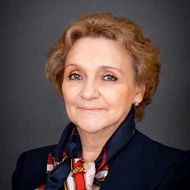
DSc, Professor, Scientific Supervisor, School of Regional Studies, Faculty of the World Economy and World Politics, HSE University
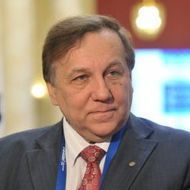
PhD, Professor, Head Middle Eastern and North African Centre, School of Regional Studies, Faculty of World Economy and International Affairs, HSE University

DSc, Professor, Head, CCEIS Asia-Pacific Centre, School of Regional Studies, Faculty of World Economy and International Affairs, HSE University
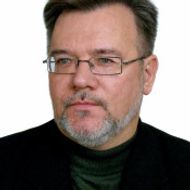
DSc, Professor, Head, Сhina and East Asia Centre, School of Regional Studies, Faculty of World Economy and International Affairs, HSE University

PhD, Deputy Dean, Associate Professor, School of International Affairs, Faculty of World Economy and International Affairs, HSE University

DSc, Professor, School of World Economy, Faculty of World Economy and International Affairs, HSE University; Director, Institute of World Military Economy and Strategy, HSE University

PhD, Associate Professor, School of International Affairs, Faculty of World Economy and International Affairs, HSE University; Academic Supervisor, International Programme «International Relations and Global Studies», Faculty of World Economy and International Affairs, HSE University
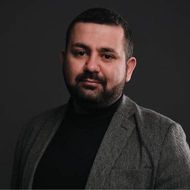
Lecturer, School of Regional Studies, Faculty of World Economy and International Affairs, HSE University
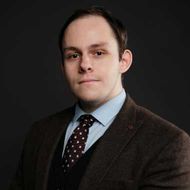
Lecturer, School of Regional Studies, Faculty of World Economy and International Affairs, HSE University; Deputy Director, Institute for Global Military Economics and Strategy, HSE University
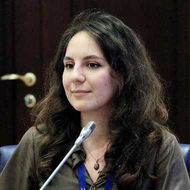
Lecturer, School of Regional Studies, Faculty of World Economy and International Affairs, HSE University

Junior Research Fellow, Centre for Comprehensive European and International Studies (CCEIS), HSE University; Manager, School of Regional Studies, Faculty of World Economy and International Affairs, HSE University; Visiting Lecturer, Faculty of World Economy and International Affairs, HSE University
