- A
- A
- A
- ABC
- ABC
- ABC
- А
- А
- А
- А
- А
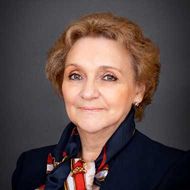



The School of International Regional Studies is a research and educational centre seeking to revive international regional studies as an academic discipline in Russia. The department’s world-class professors train the next generation of regional studies specialists while developing an increasingly prestigious research school.
Simons G., Glaser M., Krivushin I. et al.
Cham: Palgrave Macmillan, 2025.
In press
Nikiporets-Takigawa G., Filatov O.
Политическая экспертиза: ПОЛИТЭКС. 2026. No. 3. P. 1-15.
Anastasia Perminova, Anastasiia Tyukhtina, Antasheva M. et al.
In bk.: Circular Economy and Sustainable Innovation. Pathways and Applications for a Greener Future, Volume 2. Springer, 2025. Ch. 1. P. 1-24.
Shein S., Ryzhkin E.
Political Science. PS. Высшая школа экономики, 2022. No. 89.

Online Seminar № 69: "Is a Regional Conflict Possible in the Middle East?"
The online seminar was moderated by Olga Volosyuk, Head of the School of Regional Studies of the Faculty of World Economy and International Affairs of the HSE University.
M. Sadygzade delivered an introductory lecture on the topic "Is a Regional Conflict Possible in the Middle East?" In his lecture, M. Sadygzade analyzed the causes of the latest escalation of the Middle East conflict, identifying its internal, regional, and global factors. The speaker also described how these factors influence the development and deepening of the conflict.
The lecture was followed by a question-and-answer session, where the audience could ask questions on the topic. M. Sadygzade's lecture highlighted the relevance and complexity of the Middle East conflict, as well as the importance of its comprehensive analysis.