About the school
The School of International Affairs brings together specialists who combine teaching ability with academic work. Many are actively involved in international relations and foreign policy. Members of the department implement educational programmes grounded in analysis of the interdependent nature of the world economy and international relations, profound realism, and a combination of western and eastern research.
News
-
-
-
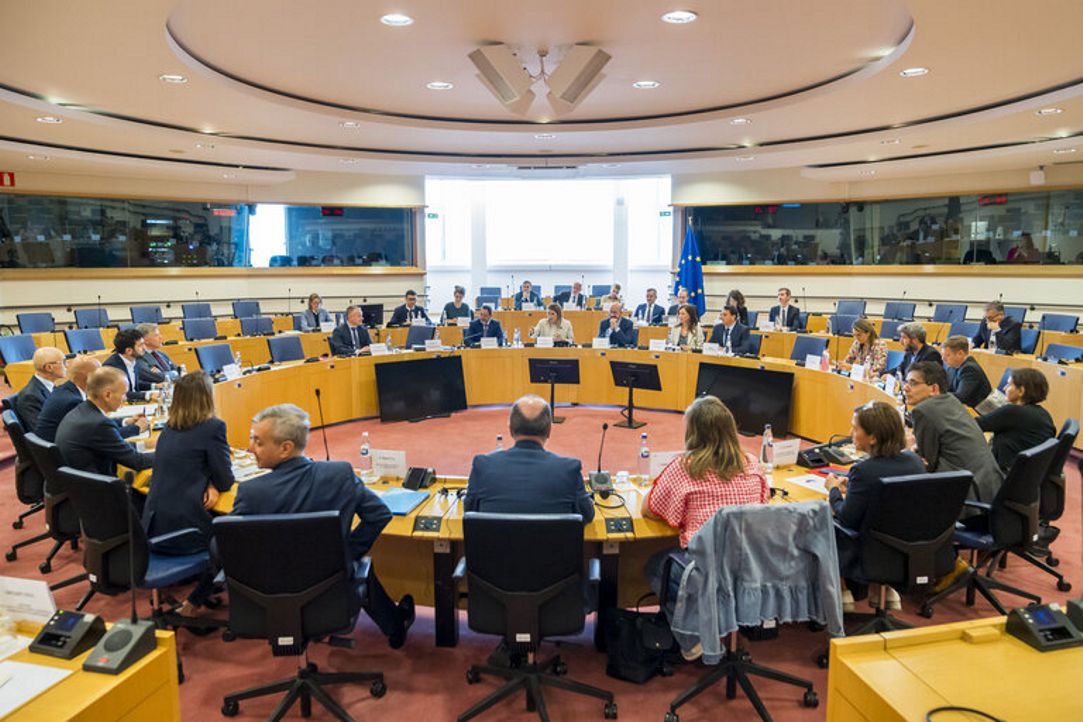
Commentary by D. Novikov on Macron’s statements
February 29, 2024
-
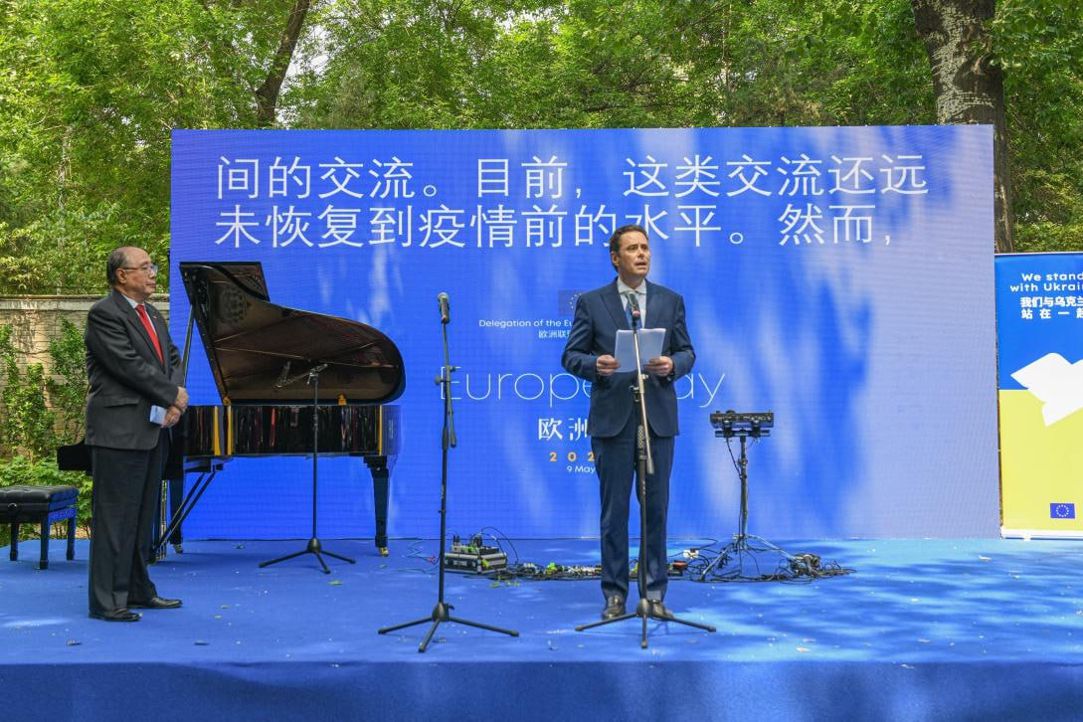
Dmitry Novikov commented on Western assistance to Ukraine
February 08, 2024
Publications
-
Book
The Global South in the Kremlin’s Foreign Policy after 24/2
This book offers the first in-depth analysis of the evolution of Russia’s relations with the Global South across political, military-political, and economic domains. Though formally part of the Global North, Russia has, since 2007, increasingly positioned itself as an independent—and often opposing—actor to the West, aligning more closely with the Global South. This volume explores Russia’s foreign policy during the 2022–2024 war with Ukraine and confrontation with the West, analyzing it at both global and regional levels. The contributors propose models for understanding the Kremlin’s shifting strategies, including doctrinal orientations, redefinitions of national interest, and the role of personal leadership. The book also examines the tools of Russian foreign policy in the evolving geopolitical context. It highlights key areas such as Russia’s efforts to reshape BRICS as a geo-economic counterweight to the West, its renewed activism in Sub-Saharan Africa, complex Middle Eastern diplomacy, and its strategic turn to Latin America—all within the broader pivot to the Global South. Placed in long-term historical context—from the medieval era to the 2000s—the book combines theoretical and applied analysis. It is written for a multidisciplinary audience and is suitable for academic and classroom use.
Cham: Palgrave Macmillan, 2025.
-
Article
French Exit, Russian Entry: What’s Next for Nigeria’s Role in ECOWAS?
Nigeria, a regional leader, is being forced to rethink its position due to the shifting balance of power in West Africa. The withdrawal of French troops, the emergence of the Alliance of Sahel States (AES), and the expansion of Russian influence have drastically altered the region’s power structure. As chair of ECOWAS, Abuja faces the Herculean challenge of leading a more divided West Africa, where security interests and economic agendas increasingly converge. This paper examines Russia’s growing influence in the Sahel region and its potential impact on Nigeria’s foreign policy. Drawing on qualitative research that includes policy analysis and in-depth interviews with Nigerian pundits, the authors assess Abuja’s responses to these developments. By highlighting the significance of Russia’s involvement, the paper offers a fresh perspective on Nigeria’s leadership within ECOWAS and the evolving nature of its foreign policy amid the region’s changing security and economic landscape. The research seeks to determine whether Nigeria can reassert itself amid Russia’s growing presence and the formation of the AES and leverage regional initiatives such as the Trans-Saharan Gas Pipeline to advance its strategic interests.
Society. 2025. P. 1-11.
-
Book chapter
Science Diplomacy as a Form of Arctic Global Governance in the Age of Geopolitical Turbulence
This chapter aims to examine the role of science diplomacy in Arctic global governance. Particularly, the following theoretical approaches are explored: First, there is an interpretation of Arctic science diplomacy (ASD) as a form of enhanced international scientific cooperation that aims to establish long-term and sustainable research partnerships between scholars from different countries. According to the second approach, ASD is a tool of soft power strategy which is used by Arctic players for shaping their positive image and promoting their interests in the region. Third, some politicians and experts view ASD as a form of public diplomacy which, on the one hand, targets not only state but also non-state/civil society institutions in foreign countries and, on the other hand, aims at improving bilateral and multilateral relations in the region. Fourth, given the growing tensions between the Western Arctic countries and Russia some Western policy makers and even academics started to see science diplomacy as an instrument of coercive policy or punishment of Russia (or—more exactly—Russian scholars) for Moscow’s special military operation in Ukraine. This approach can hardly be considered as a positive one because it undermines Arctic cooperation rather than supports it. However, there is still a fifth approach which perceives science diplomacy as an instrument of Arctic global governance which, on the one hand, prevents sliding academic communities to the Cold War-ype confrontation, and, on the other, preserves and further develops international scientific cooperation on most vital Arctic problems such as climate change, ice and permafrost dynamics, biodiversity conservation, environmental monitoring, maritime safety, indigenous peoples, and so on. This study also explores which global, regional, and bilateral platforms, venues and institutions are available for ASD implementation both at the inter-state and non-state levels.
In bk.: GlobalArctic. The New Dynamics of Arctic Governance. Palgrave Macmillan, 2025. Ch. 15. P. 395-415.
-
Working paper
NAVIGATING COMPLEXITIES: THE EU'S PERCEPTIONS OF CHINA'S ROLE IN THE UKRAINIAN CONFLICT AND IMPLICATIONS FOR THE EU-CHINA RELATIONSHIP
The EU-China relationship has evolved from a mere economic partnership to a multifaceted relation, with the EU perceiving China as a cooperation partner, economic competitor, and systemic rival since 2019. In 2022, the eruption of armed conflict in Ukraine prompted a significant response from the EU, including sanctions against Russia and indirect measures like capping Russian oil prices for third countries. This event triggered a shift in EU foreign policy, with China maintaining neutrality while facing assertive European demands. This article examines the EU's view of China's response to the Ukrainian conflict, analyzing China's peace principles and their potential impact on the broader EU-China relationship.International Relations. IR. Издательский дом НИУ ВШЭ, 2023