About the school
The School of International Affairs brings together specialists who combine teaching ability with academic work. Many are actively involved in international relations and foreign policy. Members of the department implement educational programmes grounded in analysis of the interdependent nature of the world economy and international relations, profound realism, and a combination of western and eastern research.
News

-
-
-
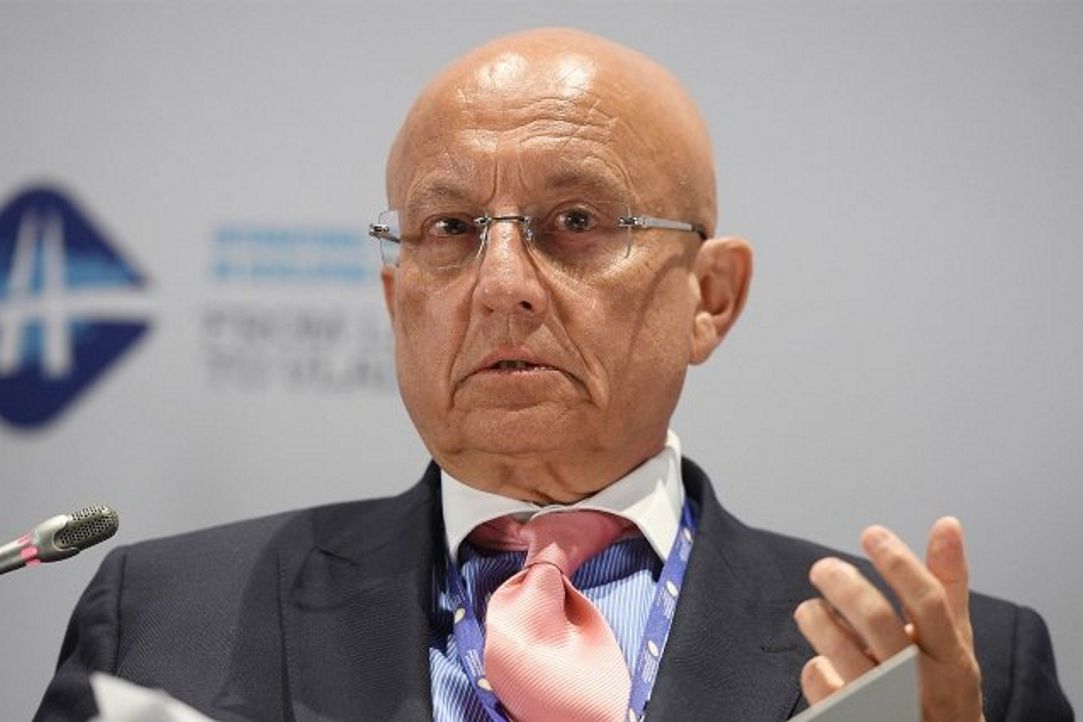
S. Karaganov for Russian newspaper “Argumenty i Fakty”
July 12, 2023
-
A Difficult but Necessary Decision
June 14, 2023
Publications
-
Book
International Trade and Economic Development in BRICS
The central thesis of this work is that the long-term viability and coherence of BRICS will be determined not by the mere fact of its economic aggregation, but by its capacity to manage the profound tensions between its centripetal objectives and its centrifugal internal dynamics.
Singapore: Springer, 2026.
-
Article
The “Cultural Revolution” in China and World Political Thought
The year 2026 marks the sixtieth anniversary of the beginning in China of the “Great Proletarian Cultural Revolution” – an unprecedented political campaign both in its duration and in the tragic nature of its results and consequences. Despite the publication of numerous books and articles devoted to it in various countries around the world, its causes, ideological origins, and influence on Chinese and global thought remain insufficiently studied and are at times interpreted rather superficially. Yet its impact was highly significant: at the time, the course of the “Cultural Revolution” was followed closely, and with differing sentiments, in many countries; its ideas and practices enjoyed considerable popularity not only in China but also among left-wing circles in Europe, the United States, and certain Asian countries, and even today its legacy is assessed in an ambiguous manner. Although the “Cultural Revolution” has been officially condemned within China, this condemnation has gradually lost some of its sharpness, and certain aspects are even regarded with a degree of nostalgia. Abroad, many questions connected with the events of Chinese history in the 1960s and 1970s continue to be debated, often giving rise to markedly divergent, and at times opposing, views.
The present anniversary offers a valuable opportunity to return to the events of those years and to examine them not only on the basis of new documents that became available after their conclusion, but also in light of current knowledge concerning subsequent trends in the development of global social thought. Such an approach is necessary for a more adequate assessment of the “Cultural Revolution” and of the ideology that gave rise to it.
Telos. 2026. Vol. 2026. No. 215. P. 11-41.
-
Book chapter
Essay 49: Re-Evaluation of Contemporary Approaches to Regionalism: In Quest of a Non-western Research Agenda
In recent decades, the Collective West (Collective West—A geopolitical construct demonstrating the unity of the political, economic, and social systems and the foreign policy approaches of the states of the Euro-Atlantic region. The concept unites the US and its allies: the member states of the European Union and the North Atlantic Treaty Organisation (except Türkiye), as well as Japan, South Korea, Australia, and New Zealand.) has been the driving force behind the development of regionalism, both in theory and in practice. In practical terms, this is primarily constituted by a network of economic partnership agreements, association agreements, enhanced partnerships, including the EU-ACP, which cements neo-colonial centre-periphery relations (Bokeriya et al., 2022), a phenomenon that is reinforced by other elements of the structural power of the Collective West, including the WTO (trade), the Bretton Woods institutions (finance), the OECD (economics), and NATO (security) (Strange, 1988).
In bk.: Essays on Global Regionalism I. The Past, Present and Future of Regionalism Studies. Cham: Springer, 2026. P. 495-508.
-
Working paper
NAVIGATING COMPLEXITIES: THE EU'S PERCEPTIONS OF CHINA'S ROLE IN THE UKRAINIAN CONFLICT AND IMPLICATIONS FOR THE EU-CHINA RELATIONSHIP
The EU-China relationship has evolved from a mere economic partnership to a multifaceted relation, with the EU perceiving China as a cooperation partner, economic competitor, and systemic rival since 2019. In 2022, the eruption of armed conflict in Ukraine prompted a significant response from the EU, including sanctions against Russia and indirect measures like capping Russian oil prices for third countries. This event triggered a shift in EU foreign policy, with China maintaining neutrality while facing assertive European demands. This article examines the EU's view of China's response to the Ukrainian conflict, analyzing China's peace principles and their potential impact on the broader EU-China relationship.International Relations. IR. Издательский дом НИУ ВШЭ, 2023